
1. Rotavirus Reverse Genetics and Viral Pathogenesis
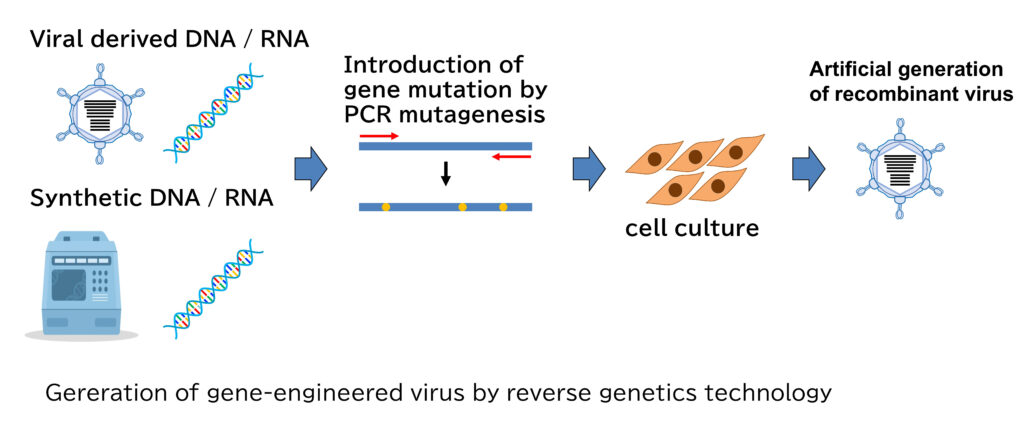
Rotavirus remains a leading cause of severe gastroenteritis in infants and young children worldwide. Our laboratory has established an advanced plasmid-based reverse genetics system, enabling precise manipulation of all 11 genome segments. This technology allows us to dissect gene function in unprecedented detail and to generate recombinant viruses for both basic and translational research.
2. Intestinal Microbiota–Virus Interactions
The gastrointestinal tract harbors a complex microbial ecosystem that profoundly influences enteric viral infections. We study how intestinal bacteria, metabolites, and epithelial cell gene expression regulate rotavirus and other enteric viruses.
3. Zoonotic Virus Surveillance and Wildlife Virome
Emerging viruses frequently originate from wildlife, yet many remain uncharacterized. In collaboration with partners in Southeast Asia, we conduct field-based zoonotic virus surveillance, focusing on mammals such as bats, primates, and rodents.
4. Molecular mechanisms of replication of praramyxoviruses
The family Paraxyoviridae contains many well-known human and animal pathogens, such as human parainfluenza virus type (PIV) 1-4, measles virus, mumps virus, Sendai virus, Nipah virus, and RS virus. We have been studying PIV2, PIV5, SV41, and Sendai virus, using reverse genetics and other methods.
To explore the mechanisms of viral growth, we are currently conducing the following projects.
1. Identification of cellular proteins that interact with viral proteins.
2. Functional studies of each viral protein.
3. Molecular mechanisms of immune system inhibited by viral proteins.
4. Development of highly efficient reverse genetics system for negative-strand RNA viruses.